Fire Damage Recovery Checklist
A fire damage recovery checklist for safety clearance, photos, documents, temporary housing, damaged items, smoke cleanup notes, contractors, and claim records.
Last updated: September 23, 2026
Built for fire recovery organization after official safety clearance: photos, temporary housing, damaged belongings, smoke cleanup, additional living expenses, contractor scopes, and claim records.

Checklist formats
Edit online, print, or save this template
Start with the ready-made fire damage recovery checklist, customize the tasks, then print a clean copy or save it as a PDF.
- Items
- 8 editable tasks
- Time / effort
- 15-45 minutes per session
- Best for
- A fire damage recovery checklist for safety clearance, photos, documents, temporary housing, damaged items, smoke cleanup notes, contractors, and claim records.
- Focus
- A fire damage recovery checklist for safety clearance, photos, documents, temporary housing, damaged items, smoke cleanup notes, contractors, and claim records.
Need a custom version?
Create a job-ready service checklist
Workflow checklist pack · $199-$499 one-time · quote confirmed before work starts.
Service workflow upgrade
Create a job-ready service checklist
Add zones, service scope, inspection notes, exceptions, supplies, before-and-after proof, and customer signoff so the checklist fits the actual job.
- Job scope and zones
- Inspection and exception fields
- Customer-ready signoff
Business-ready checklist
Reach people planning this exact job
ReadyChecklist is open to simple sponsorships, licensed checklist templates, and co-branded versions for home-service companies, contractor marketplaces, repair providers, installation services, maintenance brands, inspection tools, and local service operators.
Quick answer
What this checklist is for
Built for fire recovery organization after official safety clearance: photos, temporary housing, damaged belongings, smoke cleanup, additional living expenses, contractor scopes, and claim records.
- Best for
- A fire damage recovery checklist for safety clearance, photos, documents, temporary housing, damaged items, smoke cleanup notes, contractors, and claim records.
- Core checklist items
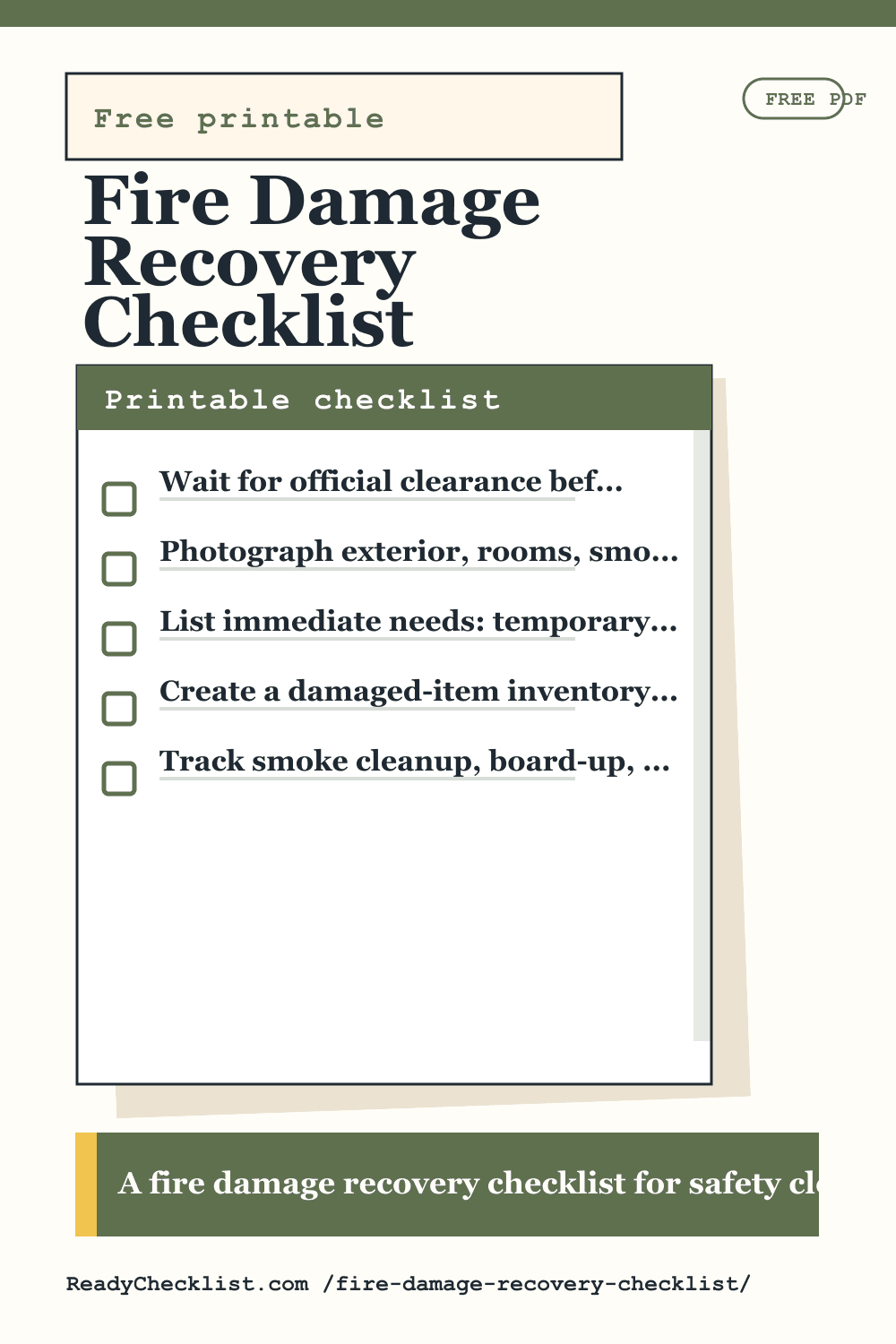
- Wait for official clearance before entry and record incident number, fire department contact, insurer, landlord, utility status, and unsafe areas, Photograph exterior, rooms, smoke damage, water damage, contents, appliances, documents, vehicles, and structural concerns when safe, List immediate needs: temporary housing, clothing, medication, documents, pet care, transportation, food, chargers, and emergency contacts, Create a damaged-item inventory with room, item, brand, age, photos, receipt status, estimated value, and salvage or disposal notes, Track smoke cleanup, board-up, tarping, debris removal, utility restoration, mitigation appointments, and contractor estimates
Printable fire damage recovery checklist
- Wait for official clearance before entry and record incident number, fire department contact, insurer, landlord, utility status, and unsafe areas
- Photograph exterior, rooms, smoke damage, water damage, contents, appliances, documents, vehicles, and structural concerns when safe
- List immediate needs: temporary housing, clothing, medication, documents, pet care, transportation, food, chargers, and emergency contacts
- Create a damaged-item inventory with room, item, brand, age, photos, receipt status, estimated value, and salvage or disposal notes
- Track smoke cleanup, board-up, tarping, debris removal, utility restoration, mitigation appointments, and contractor estimates
- Save hotel, meal, clothing, storage, laundry, pet boarding, medication replacement, and other additional living expense receipts
- Keep adjuster notes, contractor scopes, restoration invoices, permit questions, payment status, and supplemental claim tasks together
- Plan closeout records for repairs, warranties, final photos, inventory updates, document replacement, and future emergency kit improvements
How to use this checklist
Built for fire recovery organization after official safety clearance: photos, temporary housing, damaged belongings, smoke cleanup, additional living expenses, contractor scopes, and claim records. Bookmark /fire-damage-recovery-checklist/ if you use this checklist repeatedly.
Planning tips for this checklist
Wait for clearance, then document
The checklist starts after officials say entry is safe. From there, organize incident contacts, photos, contents inventory, smoke or water damage notes, and immediate household needs.
Track living expenses early
Temporary housing, meals, clothing, medicine, laundry, storage, pet care, and transportation can be easy to miss. Record dates and receipts from the first day.
Close the loop after repairs
Fire recovery is not finished when cleanup starts. Keep contractor scopes, permits, warranties, final photos, replacement documents, and claim closeout notes together.
Frequently asked questions
What should a fire damage recovery checklist include?
Include safety clearance, incident contacts, photos, temporary housing, damaged-item inventory, smoke and water damage notes, receipts, adjuster communication, contractors, and closeout records.
What should I track for additional living expenses?
Track hotel, meals, clothing, medication replacement, storage, laundry, transportation, pet boarding, and other out-of-pocket costs with dates, receipts, and claim notes.
Is this checklist official fire recovery advice?
No. It is an organization tool. Follow fire officials, insurer instructions, utility guidance, restoration professionals, and qualified safety advice.