Pest Control Checklist
Free printable pest control checklist for pest signs, entry points, food and water sources, service prep, provider notes, warranty, follow-up, and prevention.
Last updated: September 23, 2026
Built for pest control service prep: pest signs, photos, entry points, food and water sources, treatment access, safety instructions, technician notes, follow-up, and prevention.

Checklist formats
Edit online, print, or save this template
Start with the ready-made pest control checklist, customize the tasks, then print a clean copy or save it as a PDF.
- Items
- 10 editable tasks
- Time / effort
- 15-45 minutes per session
- Best for
- Free printable pest control checklist for pest signs, entry points, food and water sources, service prep, provider notes, warranty, follow-up, and prevention.
- Focus
- Free printable pest control checklist for pest signs, entry points, food and water sources, service prep, provider notes, warranty, follow-up, and prevention.
Need a custom version?
Create a job-ready service checklist
Workflow checklist pack · $199-$499 one-time · quote confirmed before work starts.
Service workflow upgrade
Create a job-ready service checklist
Add zones, service scope, inspection notes, exceptions, supplies, before-and-after proof, and customer signoff so the checklist fits the actual job.
- Job scope and zones
- Inspection and exception fields
- Customer-ready signoff
Business-ready checklist
Reach people planning this exact job
ReadyChecklist is open to simple sponsorships, licensed checklist templates, and co-branded versions for home-service companies, contractor marketplaces, repair providers, installation services, maintenance brands, inspection tools, and local service operators.
Quick answer
What this checklist is for
Built for pest control service prep: pest signs, photos, entry points, food and water sources, treatment access, safety instructions, technician notes, follow-up, and prevention.
- Best for
- Free printable pest control checklist for pest signs, entry points, food and water sources, service prep, provider notes, warranty, follow-up, and prevention.
- Core checklist items
- Identify pest type, rooms affected, entry points, droppings, damage, nests, trails, bites, odors, standing water, food sources, and photos, Create a room-by-room activity log with dates, times, photos, traps, affected cabinets, recurring paths, landlord notes, and urgent areas for the technician, Check exterior foundation gaps, doors, windows, vents, pipes, attic, crawl space, garage, trash area, firewood, mulch, drains, and moisture-prone areas, Prepare service access by moving items from baseboards, cabinets, sinks, closets, attic or crawl entries, garage walls, and outdoor treatment zones, Store food, pet bowls, toys, bedding, toothbrushes, dishes, and sensitive items according to service instructions before treatment
Printable pest control checklist
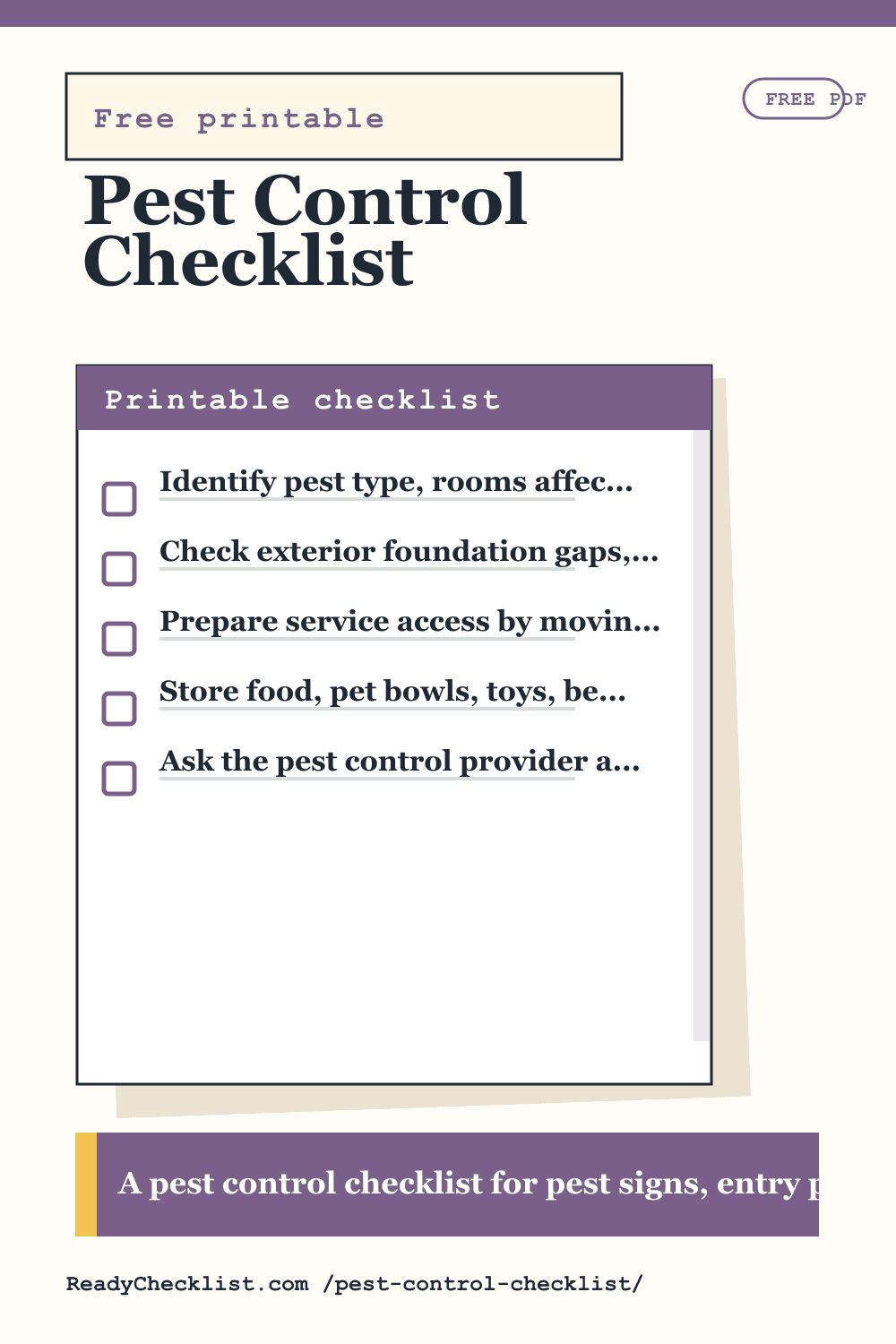
- Identify pest type, rooms affected, entry points, droppings, damage, nests, trails, bites, odors, standing water, food sources, and photos
- Create a room-by-room activity log with dates, times, photos, traps, affected cabinets, recurring paths, landlord notes, and urgent areas for the technician
- Check exterior foundation gaps, doors, windows, vents, pipes, attic, crawl space, garage, trash area, firewood, mulch, drains, and moisture-prone areas
- Prepare service access by moving items from baseboards, cabinets, sinks, closets, attic or crawl entries, garage walls, and outdoor treatment zones
- Store food, pet bowls, toys, bedding, toothbrushes, dishes, and sensitive items according to service instructions before treatment
- Ask the pest control provider about treatment type, target pest, indoor or outdoor products, re-entry timing, pet safety, children, plants, and follow-up visits
- Record technician notes, products used if provided, treated areas, excluded areas, warranty period, prevention steps, and next inspection date
- Seal entry points, reduce moisture, clean crumbs, manage trash, trim vegetation, remove standing water, and store pantry goods in sealed containers
- Track new activity, traps, sightings, bites, damage, photos, and communication before the follow-up visit or warranty claim
- Print or save the pest control checklist for service prep, landlord or tenant handoff, warranty follow-up, seasonal prevention records, and future provider quotes
How to use this checklist
Built for pest control service prep: pest signs, photos, entry points, food and water sources, treatment access, safety instructions, technician notes, follow-up, and prevention. Bookmark /pest-control-checklist/ if you use this checklist repeatedly.
Planning tips for this checklist
Document signs before treatment
Photos of droppings, damage, trails, entry points, pantry issues, moisture, and affected rooms help the technician understand where the problem starts and how it changes.
Prep depends on the treatment
Baseboard treatment, pantry pests, rodents, termites, ants, roaches, fleas, and outdoor service can require different prep. Follow the provider instructions and record re-entry timing.
Make prevention part of the checklist
Sealing gaps, reducing moisture, managing trash, clearing vegetation, storing food, and tracking follow-up sightings often matter as much as the first service visit.
Frequently asked questions
What should a pest control checklist include?
Include pest type, sightings, photos, droppings, damage, entry points, moisture, food sources, prep steps, treatment notes, safety instructions, follow-up, and prevention tasks.
How should I prepare for pest control service?
Follow the provider instructions. Common prep includes clearing access, storing food and pet items, moving items from treatment areas, noting sensitive occupants, and planning re-entry timing.
Is this pest control checklist safety advice?
No. It is an organization tool. Follow pesticide labels, provider instructions, local rules, EPA guidance, and qualified pest control professionals for treatment and safety decisions.